


Article: How to Heat-Style Hair Extensions Safely - Curling, Straightening and Blow-Drying
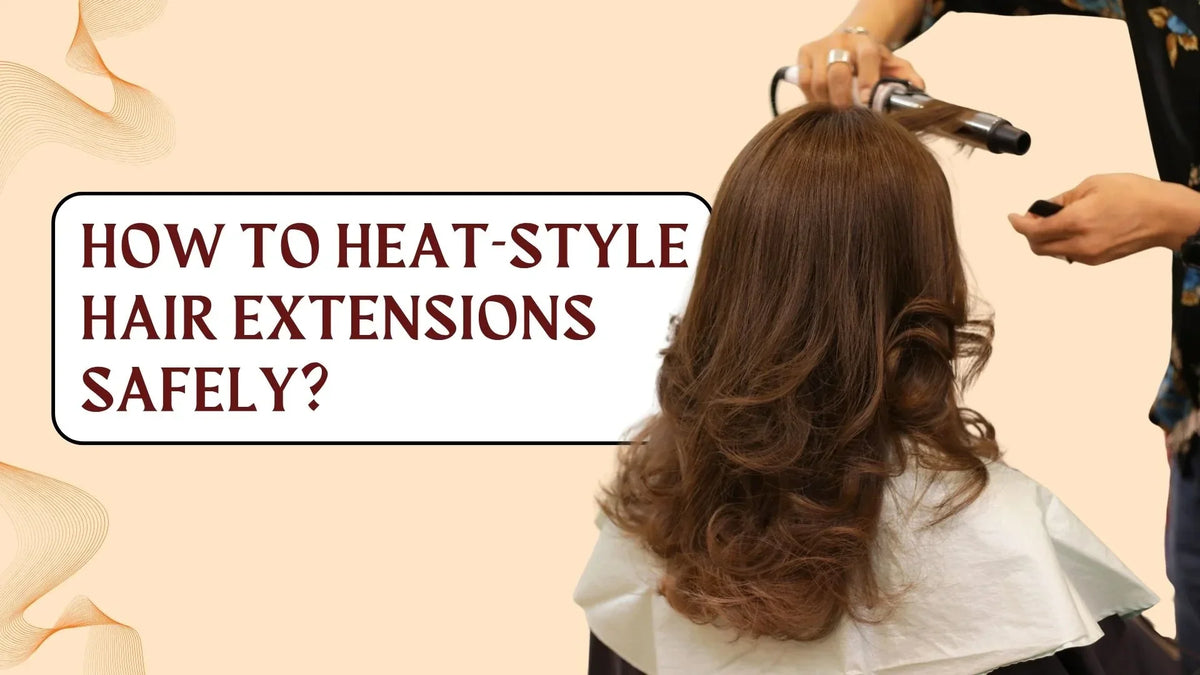
How to Heat-Style Hair Extensions Safely - Curling, Straightening and Blow-Drying
Shell Hair extensions and toppers are 100% human hair, which means you can curl them, straighten them and blow-dry them exactly like your natural hair. The difference is that extensions don't get scalp oils and can't repair themselves the way natural hair can. Heat damage on extensions is cumulative and permanent, there's no conditioning treatment that fully reverses a burnt cuticle the way it can partially restore natural hair. This guide covers exactly how to apply heat safely so your human hair extensions look better styled and last longer.
The Non-Negotiable: Heat Protectant Before Every Session
This isn't optional. Heat protectant creates a barrier on the hair shaft that reduces the temperature the cuticle actually experiences during styling. Without it, the same iron at 180°C does significantly more damage to the hair than with it. Apply to the hair before every single heat styling session, not just occasionally, every time.
How to apply: Spray or smooth through the hair when it's completely dry (not damp - heat protectant on damp hair can cause steam damage at the shaft). Work from mid-length to ends. On a human hair topper, apply to the hair only, not the base. Let it absorb for 30 seconds before applying heat.
Temperature Guide
The most common heat styling mistake is using the same temperature on extensions as on natural hair. Extensions don't have the same built-in resilience:
| Hair Type | Recommended Temperature | Maximum |
|---|---|---|
| Fine or thin extensions | 130–150°C | 160°C |
| Medium density extensions | 150–170°C | 180°C |
| Thick or coarse extensions | 160–180°C | 190°C |
| Topper base area (lace or silk) | Never apply direct heat to the base | - |
Start at the lower end of the range and increase only if the style isn't holding. You can always go slightly hotter, you can't undo a burnt section.
How to Curl Hair Extensions - Step by Step
Curling is the most forgiving heat styling technique for hair extensions because waves and movement hide the join between extensions and natural hair better than any straight style. It's also the easiest way to make a new topper look immediately natural.
- Clip in the extensions or hair topper first. Always style after clipping in, not before. If you curl the topper separately and then clip it in, the curl direction and movement will be different from your natural hair, and the join will show.
- Apply heat protectant to both the extensions and your natural hair together, one application, same product, at the same time.
- Section your hair and extensions together, treat them as one head of hair, not two separate things.
- Take small sections, no wider than 2.5 cm. Thicker sections don't curl evenly all the way through, and the inner hair near the heat source gets more heat than the outer strands.
- Keep the iron moving. Hold a curl for 8-10 seconds maximum, then release. Don't hold the iron still on any section for longer than this.
- Curl both the extension and your natural hair in the same section, in the same direction. This is what creates a unified look. Never curl your hair one direction and the extension another, they'll separate visibly with movement.
- Allow curls to cool before touching. Touching or brushing a hot curl collapses it immediately. Wait 2-3 minutes before running your fingers through.
How to Straighten Hair Extensions - Step by Step
Straightening is less forgiving than curling because a straight style shows the join between hair extensions and natural hair most visibly. The key is a completely unified pass through both.
- Clip in first, then straighten. Same rule as curling.
- Apply heat protectant to extensions and natural hair together.
- Make sure extensions are completely dry before applying a flat iron. Straightening damp hair, including lightly damp extensions, causes steam damage inside the hair shaft that weakens it significantly. If you've sprayed heat protectant, give it 60 seconds to dry before ironing.
- Take thin sections - No thicker than 2 cm. Flat irons need to grip the section completely to straighten it evenly.
- One slow, smooth pass - Don't go over the same section 3-4 times. If one pass doesn't straighten it, check your temperature and section thickness before repeating. Repeated passes on the same section are what cause the most heat damage.
- Straighten your natural hair and the extension in the same pass. Clamp both in the iron together and move through as one section. This creates identical texture and is what makes a straight style look completely unified.
- Avoid the base on toppers. Keep the flat iron on the hair, not sliding onto the silk or lace base. Direct, sustained heat on the base accelerates base deterioration.

How to Blow-Dry Hair Extensions - Step by Step
Blow drying is the gentlest heat styling option and the one most underused on extensions. Used correctly, it adds volume and body without the direct contact damage of irons.
- Only blow-dry completely removed extensions, i.e. after washing. Don't clip in and then blow-dry the extensions in your hair - The clips and base sit too close to the scalp for safe airflow control.
- Lay the hair extension or topper flat on a towel or hold on a wig stand.
- Use medium heat, never maximum. Keep the nozzle at least 15cm from the base at all times. Direct concentrated heat from a blow dryer on a silk base topper or lace base topper causes the same damage as a flat iron on the base.
- For toppers: direct airflow down the hair shaft from root to end, not across the base. Use the nozzle concentrator to keep airflow focused and away from the base edges.
- For volume after washing: Blow dry the topper base-down on a stand with a round brush, lifting the hair as you dry. This sets the base flat and adds natural volume at the root that lasts into the next wear.
Specific Tips for Indian Conditions
- Monsoon and humidity: High humidity causes styled curls and waves to drop faster than usual, in extensions as much as natural hair. A light hairspray or setting spray over the styled extensions after curling holds the style significantly longer in humid conditions. Apply after curling, from 30 cm away, before the curls cool.
- Hard water: If you're in a hard-water city and your female hair extensions feel stiff or rough before styling, a monthly clarifying wash followed by deep conditioning restores pliability. Hard water mineral deposits make extensions harder to style and more heat-resistant, which means people compensate by using higher temperatures, which causes more damage. Treat the root cause rather than turning up the heat.
- Summer heat: In peak Indian summer, the extension hair itself gets hot from ambient heat and sun exposure before you even style it. Apply heat protectant even on days you're not actively using a tool, if the extensions will be in direct sun for extended periods.
What to Avoid Completely
- Styling damp extensions - Steam damage is real and immediate
- High heat on fine or thin extensions - Starts at 130°C and only increase if needed
- Direct iron contact with the topper base - Silk and lace are damaged by sustained direct heat
- Multiple passes on the same section - One smooth pass at the right temperature is always better
- Styling extensions separately, then clipping in - Always clip in first, then style both together
- Skipping heat protectant - The damage is cumulative and irreversible on extensions
Frequently Asked Questions
Can I use the same flat iron on my extensions as on my natural hair?
Yes, but use a lower temperature setting than you use on your natural hair, especially on fine extensions. The same iron at the same temperature causes more damage on extensions because there's no scalp oil production and no natural repair mechanism. Start 20-30°C lower than your usual setting and adjust from there.
Can I curl my extensions every day?
You can, with heat protectant every time and temperatures on the lower end of the recommended range. Daily heat styling accelerates the timeline on your extensions, they'll need replacing sooner than extensions that are styled less frequently. For daily styling, wavy texture extensions are a better choice than straight texture, because they need less heat to maintain their look, often just a light wave refresh rather than a full curl session.
My extensions aren't holding a curl. What's happening?
Three possible causes: the extensions are even slightly damp (not visibly wet, just not fully dry), the section size is too thick, or the temperature is too low for the hair's density. Check all three before increasing temperature. A medium barrel (25-28mm) holds a curl better on extensions than a very large barrel, which creates a wave that drops faster.
Can I straighten wavy texture extensions?
Yes, all Shell Hair extensions are 100% human hair and straighten normally. The wavy texture will come back after washing, which is correct, the natural wave pattern returns when heat styling is removed. This is not damage. If you want to maintain a straight look, you'll need to straighten after each wash.
Will heat styling void any warranty or exchange policy?
Heat styling with correct temperatures and heat protectant is normal use and not a factor in our exchange process. Heat damage from excessive temperatures or incorrect technique is visible and distinguishable from normal wear, if your extensions are damaged by incorrect heat use, we'll tell you honestly. The best outcome for everyone is correct technique from the start, which is exactly what this guide is for.
How do I know if my extensions are heat damaged?
Heat-damaged extensions feel rough and look dull even immediately after washing and conditioning. They may have sections that are visibly different in texture - frizzier, shorter, or with a different curl pattern than the rest. Heat damage cannot be fully reversed with conditioning, though a deep condition can temporarily improve how it looks. If your extensions feel significantly different from when you bought them and you've been heat styling frequently without protectant, that's the most likely cause.
Questions about styling your specific extensions or topper? Book a 20-minute video consultation with us - ₹100, fully redeemable on your order. We'll look at your hair and your extensions together and tell you exactly how to get the style you want.


Leave a comment
This site is protected by hCaptcha and the hCaptcha Privacy Policy and Terms of Service apply.